- Villages
- Art & Culture
Borgoforte

The fortification, dating from 1216, was used to defend against military attacks from Ferrara, Modena and Reggio. Over the centuries, the strategic location chosen for its construction would continue to make Borgoforte an important point for controlling and crossing the River Po.
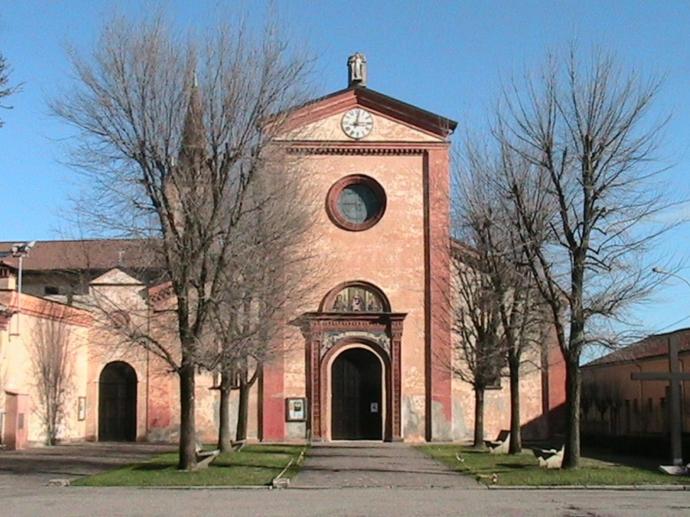
Water remains a central feature to this day. Borgoforte lies close to the riverbank and still has a river landing stage beneath its distinctive iron railway bridge, while the riverbanks and floodplains offer views across the landscape of the Lower Mantua region. In the town centre, you will also find the parish church of San Giovanni Battista, built in Baroque style in 1724 to a design by Giovanni Maria Borsotto and featuring two paintings by Giuseppe Maria Bazzani inside.
The relationship with the river, however, is best understood through the fortifications that have protected this passage for centuries. Whilst only historical records now remain of the ancient medieval fortress, just north of the village lies one of the most interesting sites in the area: the Forte di Borgoforte, a large 19th-century military fortification set in the plain, about one kilometre from the River Po.
Also known as Forte Centrale or Forte Magnaguti, this military structure was built by the Austrian Empire between 1859 and 1861. It formed part of a system of four fortifications situated on both banks of the River Po and designed to control one of the most vulnerable points along Mantua’s defensive line. Of the four forts, Borgoforte is the only one that has survived largely intact to this day.
Even from the outside the building is striking, thanks to its octagonal layout and its size: it covers an area of around 57,000 square metres and was surrounded by a wide moat. On opening days, visitors can explore the fortifications and the Museum of the Mantua Seraglio, housed within the fortifications and dedicated to the military history of the area from the Napoleonic period to the two world wars.
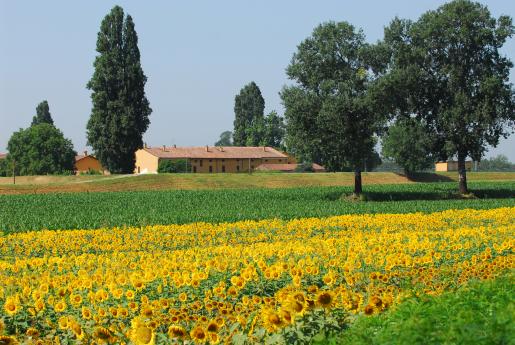
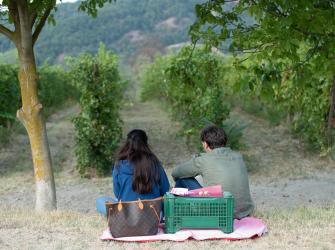
Borgoforte is also a good starting point from which to explore the culinary delights of the Mantua plain. The area forms part of the route taken by the Strade dei vini e dei sapori Mantovani (Mantua Wine and Flavours Trail), an itinerary that brings together local produce, landscape, and cultural heritage. Specialities associated with this part of the province include the Mantovano melon and the Pera Mantovana (locally grown pears), while heading south of the River Po takes you into the Lambrusco Mantovano DOC region. You can continue your tour to take in farms, local produce and small villages in the Bassa region, following another thread that links Borgoforte to the landscape of the Po.
Military history and culinary culture reveal two different facets of the same land: on the one hand, the River Po as a border to be controlled and defended; on the other, as an element that has shaped a fertile agricultural landscape and a cuisine deeply rooted in the produce of the land.